_edited_p.png)
Flea and Tick Prevention for Dogs: Signs, Risks & Protection
A few small parasites can cause a surprisingly big problem.
Fleas can leave your dog constantly scratching and uncomfortable, while ticks can transmit serious diseases and, in some cases, cause life-threatening illness. And because both parasites can be difficult to spot, your dog may be exposed before you realise there is a problem.
That's why flea and tick prevention should be a regular part of your dog's healthcare routine.
But how do you know if your dog has fleas or ticks? What risks should you be aware of? And how can you make sure your dog stays protected?

Why Is Flea and Tick Prevention Important?
Fleas and ticks are external parasites that feed on your dog's blood.
While they may be small, their impact can be significant.
Fleas can cause intense itching and skin irritation, and some dogs develop an allergic reaction to flea saliva. Ticks can transmit serious diseases, with paralysis ticks being a particularly important concern for dogs in Australia.
The challenge is that neither parasite is always easy to spot.
A consistent prevention plan can help reduce your dog's risk rather than waiting until you find a parasite attached to them.
Fleas: More Than Just an Itch
Fleas are tiny, fast-moving parasites that can be difficult to find in your dog's coat.
Even a small number of fleas can cause significant irritation, particularly in dogs with flea allergy dermatitis.
Common signs of fleas can include:
Frequent scratching
Excessive licking or chewing
Red or irritated skin
Hair loss
Small dark specks in the coat
Restlessness
Increased grooming
If your dog is suddenly scratching much more than usual, fleas are one possible cause.
However, you do not always need to see a flea for your dog to have a flea problem.
Can Fleas Cause Health Problems?
Yes.
For some dogs, flea bites cause little more than temporary irritation. For others, they can trigger significant allergic reactions and ongoing skin problems.
Heavy flea infestations can also cause blood loss, which can be particularly concerning in puppies, small dogs or animals already in poor health.
Fleas can also reproduce rapidly. Once they become established in your home and environment, getting the infestation under control can become much more difficult.
Prevention can therefore be much easier than trying to manage an established infestation.
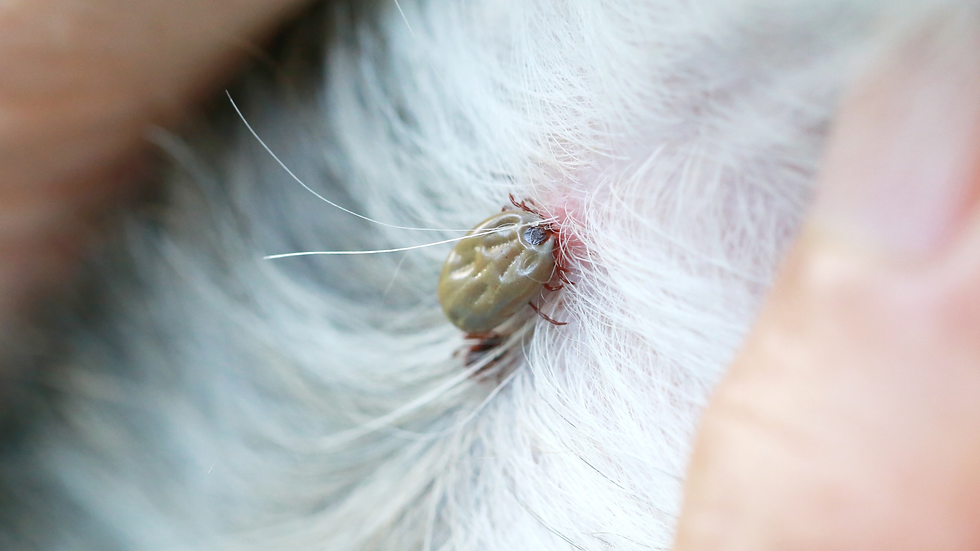
Ticks: A Serious Risk for Dogs
Ticks can attach to your dog when they move through areas where ticks are present, including grass, bushland and other outdoor environments.
In Australia, the paralysis tick is an important concern.
As the tick feeds, it can release toxins that affect the nervous system. Tick paralysis can progress quickly and may cause serious illness.
Signs can include:
Weakness or wobbliness
Difficulty walking
Changes in breathing
Difficulty swallowing
Vomiting or regurgitation
A change in your dog's bark
Collapse in severe cases
If you suspect your dog has tick paralysis, seek veterinary attention immediately.
Why Are Ticks So Difficult to Spot?
Ticks can be surprisingly easy to miss.
They may attach underneath your dog's collar, around their ears, between their toes or in other areas where they are difficult to see.
Long or thick coats can make them even harder to find.
Regularly checking your dog after outdoor activities is helpful, but checking alone should not replace appropriate tick prevention.
Does My Dog Need Flea and Tick Protection All Year?
For many dogs, maintaining consistent protection is important because exposure does not necessarily stop at a particular time of year.
Your dog's risk depends on factors including where you live, how often they spend time outdoors, their environment and their lifestyle.
Even dogs that spend most of their time at home can be exposed to fleas and ticks.
Your veterinarian can help you determine how often your dog should receive their flea and tick prevention based on their individual risk.
What If You Find a Flea or Tick on Your Dog?
If you find a parasite on your dog, don't assume that removing the visible parasite means the problem is solved.
A single flea can be part of a larger infestation, while finding a tick means your dog has been exposed to an environment where ticks are present.
Speak with your veterinary team about whether your dog's current prevention is appropriate and whether any additional steps are needed.
If your dog is showing signs of tick paralysis or appears suddenly weak or unwell after potential tick exposure, seek veterinary care immediately.
Flea and Tick Prevention Is Part of a Bigger Picture
Fleas and ticks are only two of the parasites that can affect dogs.
Your dog may also need protection against intestinal worms and heartworm, depending on their individual risk.
This is why parasite prevention should be considered as a complete plan rather than simply treating one parasite at a time.
Your veterinary team can help you determine which preventative treatments are appropriate for your dog and make sure there are no unnecessary gaps in protection.
Get 12 Months of Intestinal Worming Free This October
If your dog's flea and tick prevention is due, October is a good opportunity to review their overall parasite protection.
From October 5 to October 31, Paddington Vet is offering a special promotion for dogs.
When your dog receives their annual Bravecto Quantum flea and tick injection, they can receive 12 months of intestinal worming at no extra cost.
The offer also applies when your dog receives their annual SR-12 heartworm injection.
If a heartworm test is required before the annual injection, the test is also free as part of the promotion, including for dogs who are new or overdue for their heartworm prevention.
It is a simple way to keep your dog's parasite protection on track while receiving a full year of intestinal worming at no extra cost.
Book your dog's appointment before October 31 and speak with the Paddington Vet team about the right parasite protection for your dog.
Keep Fleas and Ticks From Becoming a Bigger Problem
You don't need to wait until your dog is scratching constantly or a tick has attached before thinking about parasite prevention.
Regular flea and tick protection, combined with routine veterinary care and checking your dog after outdoor activities, can help reduce the risks these parasites pose.
If you're unsure whether your dog's current flea and tick prevention is still appropriate, speak with the team at Paddington Vet.
Comprehensive Pet Care for Paddington, Red Hill, Bardon, and Beyond
Paddington Vet is your trusted partner for exceptional pet care, proudly serving Paddington and surrounding communities including Red Hill, Bardon, Milton, Petrie Terrace, and Kelvin Grove. We also care for pets across Brisbane’s inner west, including Auchenflower, Toowong, Taringa, St Lucia, and Indooroopilly, along with nearby suburbs such as Ashgrove, The Gap, Herston, Spring Hill, West End, and South Brisbane.
Our services extend to Fig Tree Pocket, Chapel Hill, Kenmore, and Kenmore Hills, making quality veterinary care accessible to pet owners across Brisbane’s inner and western suburbs.
Your pet’s well-being is always our priority, and we look forward to welcoming you both to our clinic.
Book Your Convenient Same-Day Appointment Now!!!
We understand the urgency of pet care needs. Don’t hesitate to request a same-day appointment today. Experience the exceptional care that defines Paddington Vet and ensures your pet’s health and happiness.


Comments